The Horse | Horse Owners Challenged by Heat, Drought

Earlier this summer, triple digit temperatures had horse owners and their animals sweltering. Now owners remain hot under the collar as they worry about hay and feed availability with the persistent heat and ongoing drought.

In late June and early July temperatures rose to 100 degrees and higher in the Midwest, the Tennessee Valley, Kentucky, and elsewhere. Though rain began to fall in some areas in the Midwest since then, the National Weather Service Climate Prediction Center of the National Oceanic and Atmospheric Administration (NOAA) sees little long-term relief. On July 16 NOAA reported that drought conditions continue to increase in both extent and intensity across much of the Ohio and Tennessee Valleys, the Corn Belt region, the middle and lower Mississippi Valley, and much of the Great Plains.

Brian Fuchs, spokesman for the National Drought Mitigation Center, said 60% of the lower 48 states are under drought conditions. What’s more, he said, the combined hot and dry conditions have already taken a toll on corn and hay crops and have left pastures parched.

“Pastures that got good (rain) soakings in the spring are brown and have gone dormant,” Fuchs said. “It’s doubtful that hay producers will get a third cut, and the corn crop will be reduced.”

That’s not news to Frank Bowman, executive director of the Horseman’s Council of Illinois. According to Bowman, the Illinois corn crop has already failed due to high heat and scant rain. Meanwhile, hay fields and pastures are rapidly turning brown, he said, and the combination makes for high feed and hay prices for horse owners.

“Last year we (in Illinois) were sending hay to Texas,” Bowman said. “Now, people who don’t already have their hay up will have a hard time finding any.”

Conditions are a bit better in south central Kentucky where several days of rain brought some relief. But Wayne County barn operator Kari Sullivan says she can only hope to get another cutting of hay.

“The rain made everything look like spring again, but we’re still not sure we’ll get more hay in,” Sullivan said. “Other counties didn’t get the rain we did and they’re really worried.”

Fuchs agrees there’s reason to worry: “There may be small rain storms throughout the drought area, but it’s doubtful that they will have any real effect. It does not look like either the heat or the drought will end soon.”

When forage is expected to remain in short supply, Alessandra Pellegrini-Masini, DVM, PhD, Dipl. ACVIM, clinical assistant professor of large animal internal medicine at the University of Georgia, previously told The Horse that horse owners should consider making adjustments. She suggests they supplement their animals’ diets with Dengie Hay, a commercially produced heat-dried, short cut grass and alfalfa product that provides calories a

The Horse | Texas A&M Veterinarian Offers Equine Deworming Suggestions

Deworming treatments are often a regular component of horse health maintenance, but some horse owners might not know the best schedule for their horse. While deworming regimens vary by region, there are some guidelines for owners to follow as they work with their veterinarians on a proper deworming schedule.

Thomas Craig, DVM, MS, PhD, professor at Texas A&M University College of Veterinary Medicine & Biomedical Sciences (CVM), who specializes in epidemiology and the control of internal parasites in equines and grazing animals, offered some insight into deworming. Craig explained that in a given population of horses, about 20% will have 80% of the total internal parasites of the herd.

Another basic guideline is that deworming should be based on the age of the horse. There is a drastic difference in the deworming needs of a foal (less than a year old) and an adult horse.

“What’s effective in adults may not be effective in foals,” Craig said.

Craig suggested deworming foals for the first time at two months of age. Parascaris equorum are of particular concern at this age.

“I recommend using fenbendazole, a broad spectrum benzimidazole anthelmintic… or a pyrantel dewormer … for foals two months old,” Craig said.

As the foal matures, it is recommended that the same treatment be used at four and six months of age. When the foal reaches a year old, Craig suggested using an ivermectin or moxidectin treatment for deworming.

When worming adult horses (older than one year), the approach changes considerably. The most dangerous parasitic threat to horses are small strongyles, which are present in most horses. Craig recommended testing mature horses through fecal samples to determine the number and types of parasitic eggs in the horse’s digestive system.

via The Horse | Texas A&M Veterinarian Offers Equine Deworming Suggestions.

via The Horse | Texas A&M Veterinarian Offers Equine Deworming Suggestions.

No Country For Old Horses? Senate considers horse slaughter – News Blog – The Austin Chronicle

Horses awaiting slaughter at the now-closed Dallas Crown plant in Kaufman

When the Dallas Crown Inc. horse slaughter plant operated in Kaufman, plant operators bought the small North Texas city a large American flag to place outside the American Legion Hall. In retrospect, that flag did nothing but to make “a mockery of our values,” former Kaufman mayor Paula Bacon told the Texas Senate Committee on Agriculture & Rural Affairs.

It would be better, she said, to have a “lead-smelting plant and sex-oriented businesses up and down” a city’s main drag than it would to have a horse slaughtering facility in any Texas town. Bacon was among many who came out to a four-hour meeting at the Capitol to testify and show their opposition to the possible resumption of horse slaughtering in Texas – for meat that is then primarily shipped to Europe and Japan for human consumption – a practice that has been banned in the state since 1949.

In Kaufman, which was home to one of three U.S. slaughterhouses when the industry was effectively shuttered in 2007 (the others were in Fort Worth and in Dekalb, Ill.), the industry brought with it nothing positive, Bacon testified; crime was high while the plant operated there, she noted, and the burden the plant placed on the city’s environmental infrastructure, including on its water treatment facility, was enormous. Indeed, during the mid-Eighties, the plant was shuttered for nearly a year because neither the plant nor the city’s water treatment facility was able to process the blood from the slaughtered horses, which was full of antibiotics. “Literally, blood was coming up through the streets,” she testified, “and into people’s bathtubs.” In a single 19-month period, she said, the Dallas Crown plant was “out of compliance” 487 times, racking up 23 local citations that would have cost the company nearly $1 million; they never did pay up, she said. When the plant finally shut down its operations, the city of Kaufman was able to breathe a collective sigh of relief.

via No Country For Old Horses? Senate considers horse slaughter – News Blog – The Austin Chronicle.

via No Country For Old Horses? Senate considers horse slaughter – News Blog – The Austin Chronicle.

US Drought Monitor

http://droughtmonitor.unl.edu/

US Drought Monitor, July 10, 2012

The Horse Clones Are Coming : BuzzFeed

In 2009, Tailor Fit had a problem — or, more accurately, his owners did. He had a great lineage, two AQHA championships behind him and, under other circumstances, he would have had a lucrative string of stud fees ahead of him. But like most champion quarter horses, Tailor Fit was a gelding and couldn’t breed — so his owners lost out on a wealth of stud fees and anyone who wanted to breed towards a better quarter horse was out of luck. Unless, of course, they were into cloning.At the time, Blake Russell was three years into his tenure at Viagen, a livestock cloning company. He was also a racing fan, so when Tailor Fit caught his eye, he was able to collect a tissue sample and work up an exact clone. The resulting horse was christened Pure Tailor Fit, an ungelded replica of the original, ready to be replicated whenever the need might arise.

via The Horse Clones Are Coming.


Two more West Nile cases confirmed in county | Denton Local News – News for Denton, Texas – The Denton Record-Chronicle – Denton Record-Chronicle

Two more cases of West Nile virus have been confirmed in Denton County, this time inside the city limits of Denton.

County health department officials confirmed the cases last week. City officials soon will be spraying pesticide to ward off the pests, while health officials encourage people to heed their tips to protect themselves from mosquito exposure.

“We know this is very early for the disease in our county. Usually we’ll start taking cases in July or August,” said Sarah McKinney, Denton County Health Department spokeswoman.

A case of the virus was confirmed in Denton County in late May. Of the three cases, one was confirmed to be West Nile fever while the other two were the more serious neuro-invasive disease. Two of the patients were hospitalized but have since been discharged and one from last week’s cases remains in a hospital, she said.

via Two more West Nile cases confirmed in county | Denton Local News – News for Denton, Texas – The Denton Record-Chronicle – Denton Record-Chronicle.


Beat The Heat Tip

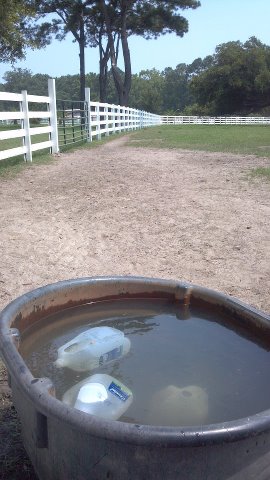
Here’s a great idea from the American Competitive Trail Horse Association on how to keep your horses water cool in the Texas heat.  Just freeze gallon jugs of water and place them in the horse’s water tanks. Remove the caps as a safety precaution.   

The Horse | Beat the Heat

More good advice from The Horse Online on helping your horse through the heat of the summer:


As tough as steamy summers can be on humans, they can be even tougher on horses. That’s because instead of choosing how they’ll deal with the heat, horses often have to depend on us to make the right management choices for them.

For advice on making those choices, we’ve turned to two equine veterinarians practicing in Florida, where heat plus humidity can deliver a double whammy to horses. At the University of Florida, in Gainesville, Amanda House, DVM, Dipl. ACVIM, is an assistant professor in the veterinary school and a state extension specialist. And Heather Farmer, DVM, owner of Equine Performance Veterinary Practice, in Lake County, Fla., tends to equine competitors that must work and perform throughout the summer.

via The Horse | Beat the Heat.

via The Horse | Beat the Heat.

Water Requirements In Horses

The Horse online provides some valuable information for horse owners on factors affecting the water requirements of equines.

The Horse | Understanding Horses’ Water Requirements

Water is one of the essential nutrients a horse needs to perform a number of life-support functions, including digestion and thermoregulation. Especially with the hot summer weather prevalent in much of the country, it’s important to ensure horses have access to water at all times.

As horse owners, we know it’s important to provide free-choice water to horses at all times, but it is also imperative that the water is of good quality, clean, and palatable.

A number of circumstances can lead a water deficiency in horses, including unpalatable taste, lack of water offered, or loss of thirst due to exertion. The effects of insufficient water intake include decreased performance, decreased feed intake, dehydration, and eventually, if not remedied, death.

On average, a typical 1,100-pound horse at maintenance consumes four to nine gallons of water per day. The amount of water a horse requires can vary depending upon several factors:   (Continue Reading By Clicking Link)

via The Horse | Understanding Horses’ Water Requirements.

Blister Beetle Alert

North Texas veterinarians are urging horse owners to keep pastures and fence lines mowed and cleared of blossoming weeds.

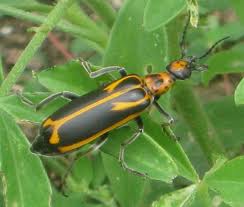
The excessive grasshopper infestation in North Texas is attracting blister beetles to the area in pursuit of grasshopper eggs, which they feed on.

Blister beetles also feed on several types of blossoming weeds that may be found in local pastures. Accidental ingestion of blister beetles by a grazing horse can cause severe blister beetle poisoning and/or death to the horse.