The Horse | Remote-Controlled Cars Used to Study Round Pen Training

Round pen training isn’t only effective with humans being the ones working the horses. According to Australian equitation scientists, even a remote-controlled car can create the same reactions in horses. And for them, this is cause for concern.

“Round pen training is said to rely on a human’s ability to mimic another horse through the trainer’s body language, but our research suggests that this may not be true,” said Cathrynne Henshall, MSc candidate and professional trainer, under the supervision of Paul McGreevy, PhD, both researchers at the University of Sydney. “We were able to get similar results from an inanimate object–a toy car–which indicates that this training result relies on applying an aversive stimulus which elicits fear, and then rewarding horses by turning off the frightening stimulus.”

Henshall presented the results of her study at the 8th International Society for Equitation Science (ISES) conference, held July 18-20 in Edinburgh, Scotland.

In other words, it’s scaring the horses and then removing the frightening stimulus when they behave the way we want, through simple negative reinforcement, she said.

via The Horse | Remote-Controlled Cars Used to Study Round Pen Training.

via The Horse | Remote-Controlled Cars Used to Study Round Pen Training.

News from The Associated Press

AP Photo

VAUGHN, N.M. (AP) — Petty crime and burglaries aren’t unusual in New Mexico’s isolated Guadalupe County, but lately Sheriff Michael Lucero has seen thieves steal something a bit unexpected: grass.

With drought drying out grazing land and driving up hay prices, some ranchers in New Mexico have started cutting neighbors’ fences or leaving gates open so their cattle can graze on greener pastures.

Authorities in other drought-stricken states say they’ve seen similar fence cuttings, along with thefts of livestock and other materials as ranchers struggle to stay in business. In some cases, stealing a neighbor’s grass may be the only way for a rancher to feed his livestock, but victims say their livelihood is being threatened too.

via News from The Associated Press.

via News from The Associated Press.

So True

Solve the Horse Manure Pile Problem from Practical Horseman | EquiSearch


Eco-friendly solutions can help manage manure on your farm through horse manure composting, spreading horse manure and more.

Not long after Anna and Brian Smith of Camden, North Carolina, built their barn in 2007, they realized they had a problem. With four horses in residence, “The manure was really piling up,” says Anna.

Keeping horses will drain your checkbook, steal your time and sap your energy—but horse manure is one item you’re sure to have in ever-increasing amounts. An average horse produces about 50 pounds of the stuff every day, or more than eight tons a year. Add a few more tons of soiled bedding, multiply the total times the number of horses you keep and just try not to feel overwhelmed. What will you do with it all?

“Unless it’s properly managed, horse manure can pose risks to the environment and to health,” says Virginia Cooperative Extension agent Carrie Swanson, who co-authored (with fellow agent Crystal Smith) an Extension publication on manure management �(online at http://www.ext.vt.edu). He

via Solve the Horse Manure Pile Problem from Practical Horseman | EquiSearch.

via Solve the Horse Manure Pile Problem from Practical Horseman | EquiSearch.

Interesting View of a Developing Fetus

Cooling Off

Watch Live Olympic Streaming Video

 NBC - 2012 Summer Olympics


http://www.nbcolympics.com/online-listings/sport=equestrian/day=july-28/index.html

Olympic Equestrian Events Schedule

via Olympic Equestrian Events Schedule.

Snakebite! – Quarter Horse News – The News Magazine of the Performance Horse Industry

snakebite

For the most part, Diamondback rattlesnakes are the primary cause of venomous snakebites in the Southwestern U.S., with Copperheads and Moccasins coming in a distant second and third, respectively. The type of snake, in my opinion, is not as important as the severity of the bite. The only time I have actually seen the snake that bit the horse I was called to look at it was still in the stall when I went in to examine it! No one bothered to check that out before calling me, and I have since learned my lesson. That being said, I’m sure young, small snakesbite as many horses as large, older ones do. But based off human medicine where most snakes are positively identified, there is some variance in the severity of the bite based solely on how much venom was injected by the snake, not the size.

Since horses do not get bit at the vet clinic, here are a few things you should have thought out and prepared for in the unfortunate case your horse is bitten. Almost all snakebites with horses occur on their nose, and subsequently the most immediate complication becomes whether or not the nasal passages swell shut. Horses cannot breathe well through their mouths alone, and if you ever see one doing it they are fixing to die, so remember that. As bad as snake venom is, it is rarely fatal in horses due to the relative proportions of venom versus the size. Therefore, the most important thing you can do is to maintain a good airway through the nostrils to prevent your horse from suffocating before emergency treatment can be started by a veterinarian. Any way you can do this is the right way. Cut off pieces of garden hoses, syringe cases, or anything else you can find that is round and about 1 inch in diameter and about 5-6 inches long. The horse may not appreciate it at the time, but having sections of tubing stuck up his nose will save his life. Step 2 is to get some type of anti-inflammatory in them. Most horsemen will have Banamine® handy and the real cool ones will have some dexamethasone also. Giving one or both of them as soon as possible will not reverse the toxin, but will mitigate some effects of it.

via Snakebite! – Quarter Horse News – The News Magazine of the Performance Horse Industry.


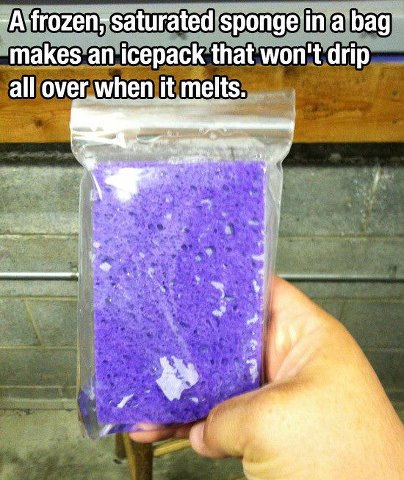
Another Quick Tip: Using a Sponge in a Plastic Bag For an Ice Pack